
GroundArrayUSA
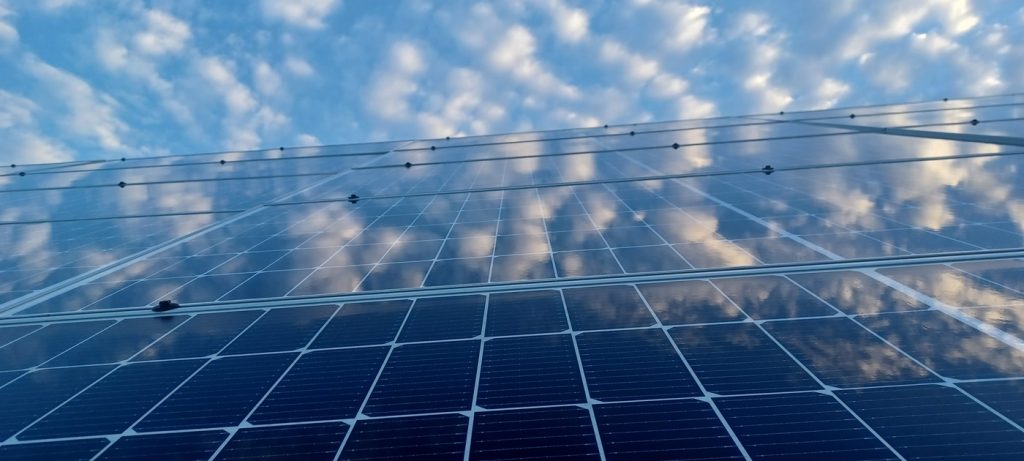
Take control of your power for your home, farm & ranch or business by harnessing solar energy. Improve your quality of life using an affordable, clean, reliable and sustainable energy solution to generate electricity from the sunlight.
Generate the electricity you need, SELL THE REST, while storing energy for times when the grid is down. Sell the rest back to the power company through net metering where available.
Solar system elements:
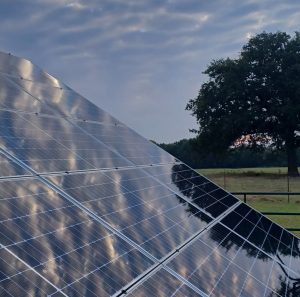 Solar panels installed on a ground based frame form the Solar Array to capture the sunlight from sunrise to sunset.
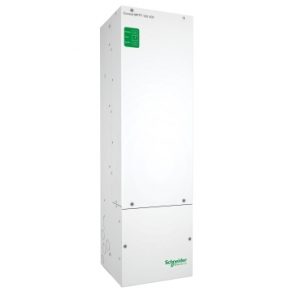 Charge controllers to convert the sunlight into usable energy which is stored on batteries for later use.
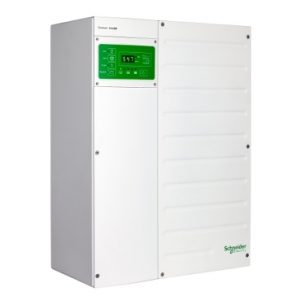 Inverters to convert stored energy from the battery into usable electricity throughout your home, barn or office.
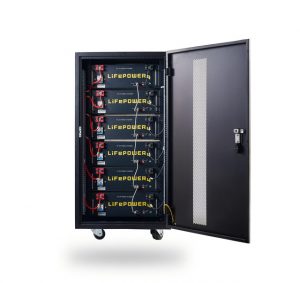 Batteries sized to match the ground array capacity and sufficient to meet your needs for backup service when the grid is down.
Power your land the smart way
Practical solar, batteries, and generator‑assist solutions built by local folks who run them on our own farms.
Get a custom quote
See sample system designs
Talk to a local installer
Why Ground Array USA
- Built local, proven local: We design, install, and maintain systems we use every day on our own farms and ranches.
- Right‑sized, not oversized: We model your loads and seasons before we sell anything.
- Workhorse reliability: Solar + batteries + intelligent generator assist keeps you running when the grid doesn’t.
- Straight talk, no hype: We’ll explain the trade‑offs, show the math, and let you decide.
Farm and Ranch Advantages
- Lower operating costs: Offset well pumps, barns, shop tools, cold storage, and fenceline power with durable solar and right‑sized batteries.
- Seasonal flexibility: Add panels for summer irrigation; prioritize batteries for winter resilience.
- Fewer fuel runs: Battery banks soak up every watt from sun and generator, cutting idle time and wasted diesel.
- Tough installs: Ground mounts, barn/arena arrays, pump sheds, and shaded battery houses that fit your land and livestock.
Rural Homes:
Grid‑Tied With Battery Backup
- Keep living, even when the grid blinks: Batteries carry your critical loads—refrigeration, well pump, lighting, communications, medical devices—automatically.
- Bill control: Use solar to offset daytime use and time‑shift energy with batteries to reduce peak draws where plans allow.
- Quiet nights: Batteries handle the house after dark; the generator tops up efficiently only when needed.
How it works
- Solar powers home and charges batteries when the sun’s up.
- At night or during outages, the inverter draws from batteries.
- If batteries get low, the generator auto‑starts to recharge quickly, then shuts down—no more all‑night idling.
Generator‑Assist:
Stop Wasting Fuel
- Continuous running = continuous waste: Home loads rise and fall, but a generator burns fuel regardless.
- Battery absorption = full value per gallon: Charge batteries hard at the generator’s sweet spot, then shut it down. Inverter feeds steady AC to the home over time.
- Fewer hours, longer life: Less runtime means less maintenance and more reliable starts when you truly need them.
Typical setup
- Inverter/charger with smart generator input
- Auto‑start generator integration
- Battery bank sized to carry your average overnight load
- Priority load panel for essentials
Smart Solar Offsets for Non‑Essential Uses
Use solar where it shines and keep your “must‑run” loads protected on batteries.
Great solar targets
- Arena lights and fans
- RV and horse trailer hookups
- Shop benches and hobby tools
- Pasture gates, tank aerators, fenceline cams
- Outbuildings with intermittent loads
Tip: Pair non‑essential circuits with a small, dedicated battery bank for smooth operation and better panel utilization—no need to oversize your main backup system.
Components We Trust: EG4 and Signature Solar
- EG4 power electronics, batteries, and balance‑of‑system components are field‑proven and supported nearby in Sulphur Springs.
- Signature Solar stocks parts, honors warranties, and supports repairs—fast turnaround matters during planting, harvest, and storm season.
We also integrate with many co‑op meters, transfer switches, well controls, and ag equipment—ask about compatibility.
How We Design Your System
- Load and goals review: Critical vs. non‑essential circuits, seasonal needs, outage expectations.
- Site and shading survey: Array placement, trenching paths, battery and generator siting.
- System modeling: Sun hours, weather patterns, and generator strategy to minimize fuel.
- Clear proposal: Equipment list, performance estimates, maintenance plan, and budget tiers.
- Build and commission: Local install, training, and post‑install check‑ins.
Local, Honest, and Here When It Matters
- We pick up the phone.
- We carry spares for common failures.
- We’ll tell you when “less” is more—and when “more” is necessary.
Next steps:
- Book a site visit
- Request a load analysis
- Talk to a neighbor with a working system
Financing options:
You have choices when purchasing a solar solution. You can be the bank or your local bank can give you options. Best of all, Federal Tax Credits up to 30% of the cost are available.
Click here to see more about: Homeowner’s Guide to the Federal Tax Credit for Solar Photovoltaics
Consider how you want to pay for the solution:
- Pay cash and enjoy lower utility bills
- Finance and use utility savings to pay for the system
- Earn money selling power back to to the utility company
- Ask your CPA about federal, state and local tax credits and incentives.
Interested? Take the first step
Step 1:
Call and schedule a complementary personal site visit to meet our team and discuss your needs and inspect your location.
Step 2:
Let us create a complementary design and proposal based on your current electric bills, requirements and expectations.
Step 3:
When you make your decision to take control of your energy, sign our proposal and working together we will begin.
Step 4:
We will order the system components and establish a build schedule for your project.
Step 5:
We will build the array and install the system.
We also will contract with a local electrician to complete the final connections to the grid and to your home.
Step 6:
After installation, testing and calibration, we will train you how to operate each of the subsystems included in your customized design solution.
Entry (Basic) level system
under $25,000
- under 8 kilowatt array & battery bank
- single controller & inverter
- best used to offset utility use
- suitable for cabin, RV or smaller homes
- generator support capability
- emergency backup power situations
- expandable in the future
Hybrid (Best) level system
about $50,000
- under 16 kilowatt array & 30 kilowatt battery bank
- dual controller & inverter
- best used to eliminate utility cost and sell surplus
- suitable for moderate sized homesteads
- 10 kilowatt dual fuel generator available
- multiple days backup during extended outage situations
- expandable in the future
Large (Max) level system
over $65,000
- up to 48 Kilowatt array & 30+ kilowatt battery bank
- dual controller & triple inverter
- best used to eliminate utility cost, produce more power and sell surplus
- suitable for larger sized homesteads and businesses
- up to 22 kilowatt generator available
- longer duration backup during extended outage situations
Service area:
- Full-service, turn-key system design, installation and on-site support available within 1 1/2 hours of De Kalb, Texas.
- Design consultation, initial installation and DIY support in Texas, Arkansas, Oklahoma and Louisiana.
Who is GroundArrayUSA?
We are an operating unit of Advisory Engineering & Analytics, LLC. We opened our doors in response to local requests after we constructed our very own solar solution to power our farm in Bowie County.
With more than 35 years designing and constructing large scale national communications networks, our focus for GroundArrayUSA is to help local home owners, farmers, ranchers and business owners to take control of energy pricing, backup power during grid outages, generating clean, stable and reliable power for self-consumption and to sell excess power to local utilities as part of a broader total sustainable future for our community. Selling power back to the utility is limited to those utility companies that participate in “net metering” with consumers.
 Henry A. Thomas, P.E.
De Kalb, Texas 75559
support@GroundArrayUSA.com
(469) 200-8233
Our approach is simple. We offer clients the most flexible service including a full-service turn-key approach to a design and consultation service for the DIY builder.
- Designed and engineered by professionals.
- Texas Engineering firm #14614, P.E. 66872
- Located in De Kalb, Texas
- 35+ years communications & energy experience
Frequently Asked Questions
Your name is GroundArrayUSA. Do you offer roof mount systems?
Our focus is on constructing ground array systems. Unless a home was designed and built to support solar panels, we prefer not to install solar panels on the structure, especially when land is available to use for this purpose.
How much area is required for the ground array and solar equipment?
- The Basic system is under 20 panels and requires an area 25 ft x 15 ft; the equipment requires about 8 ft of wall space.
- The Hybrid system is about 36 panels and requires an area 50 ft x 15 ft; the equipment requires about 12 ft of wall space.
- The Large system is about the same as combining a Basic system with a Hybrid system.
How long does a project take from start to finish?
We typically take about a week to perform the initial site inspection, develop the system design and generate the proposal. Our clients take about a week to review the proposal with their bankers and CPA’s to make their decision to purchase the solution. It takes about 2 weeks to order and receive the equipment, and while we wait for delivery we begin the site preparation including installing the frame for the ground array. Our clients call 811 to locate exiting utilities and our teams then install the panels, conduit, cables and mount the system equipment on the wall. This takes about 2 weeks. During this time our client submits the paperwork with the electric company. We like to ask our clients to expect the total process to take about 6 weeks to complete once the proposal is signed.
How many kilowatts do I need for my homestead?
There are several factors we must consider to determine the right size system for your homestead:
- How much energy do you use at peak usage?
- How much energy do you use on a typical day?
- What essential electrical devices do you need during an outage?
- How many hours or days do you expect to need during an emergency?
The quickest way to estimate energy demand is to look at your electric bill over the past 12 months. Look for the highest month and find where the statement shows total KWh (kilowatt hours) for the highest month and divide by 30 to get a daily average. A $400/mo bill should be somewhere around 100 KWh per day. Your statement may already show the average daily use.
A KWh is how many kilowatts are used by your devices measured in hours. A refrigerator that plugs into a 110V outlet and uses 3 amps and runs for 24 hours uses about 8KW during the whole day or 1/3 KW/hr, or said differently, in 3 hours the refrigerator uses 1 KWh.
If you look at the sticker on every electrical device, the voltage “V” and the amps “A” will be stated and multiplying those numbers equals watts. Add all the essential devices in your home and divide by 1000 gives you the total Kilo-watts. Estimating how many hours per day each device runs and multiplying the kilo-watts by the hours gives you kilo-watt hours.
A small 3 bedroom home probably uses around 35 KWH/Day. Using our Basic system, the solar array could capture 36 KWh in about 6 hours with the sun shining, by producing 6KW each hour for 6 hours.
To properly size your system, we need to perform a site inspection and gather your electric bills for the past year.
- 2026 Tax Rebates, Credits, and Incentives for Residential Solar Installation
A comprehensive summary of federal, state, and utility-level incentives following the passage of the One Big Beautiful Bill Act.
Report Date: July 19, 2026
————————————————————————————————————————
Executive Summary
In 2026, the incentive landscape for residential solar installations in the United States has undergone a major transition. The primary federal subsidy for homeowner-purchased systems (Section 25D) has expired. However, alternative routes such as solar leases/PPAs, carryforwards of older credits, and increasingly vital state and local incentives still offer homeowners financial support for solar and battery storage investments.
1. Federal Residential Solar Tax Credit (Section 25D) Status
The federal residential solar tax credit (formerly Section 25D), which previously offered a 30% credit for homeowner-owned systems, has expired for systems placed in service on or after January 1, 2026.
This change was enacted through the ‘One Big Beautiful Bill’ Act (OBBBA), signed into law on July 4, 2025. Key highlights of the status include:
Termination for Purchases: Homeowners who purchase systems outright (via cash or loan) can no longer claim a federal tax credit for systems installed in 2026.
Battery Storage: The termination applies to residential battery storage systems as well under Section 25D.
Credit Carryforwards: Homeowners who placed solar or battery systems in service on or before December 31, 2025, are still eligible for the 30% credit. If you have earned but unused credits from previous years, you can carry them forward to offset your 2026 tax liability.
2. Third-Party Ownership (Leases & PPAs)
While the personal tax credit under Section 25D has expired, the commercial solar tax credit (Section 48E) remains available under modified rules. Homeowners can benefit from this indirectly:
Provider-Owned Systems: Under a Solar Lease or Power Purchase Agreement (PPA), the third-party solar provider owns the equipment and can claim the commercial credit.
Indirect Savings: Providers typically pass on these tax savings to the homeowner in the form of lower monthly electricity rates or lower upfront rental costs.
3. State and Local Incentives
Due to the shift in federal policy, state and local programs are now the primary drivers of financial returns on residential solar and storage investments. These incentives vary widely by location:
State Tax Credits: Several states (e.g., New York, South Carolina) continue to offer state-specific income tax credits for residential solar installations.
Solar Renewable Energy Certificates (SRECs): In states with SREC programs (e.g., NJ, MA), homeowners earn sellable certificates for the electricity their panels generate, creating an ongoing revenue stream.
Net Energy Metering (NEM): Many states and utilities allow homeowners to earn bill credits for sending excess clean energy back into the power grid.
Utility Rebates & VPPs: Some local electric utilities offer direct cash rebates for installing batteries or panels. Additionally, ‘Virtual Power Plant’ (VPP) programs pay homeowners for letting the utility pull power from their home batteries during peak energy demand periods.
Sales & Property Tax Exemptions: Many states exempt solar equipment from sales tax and exclude the added home value of a solar installation from property tax assessments.
4. Recommended Next Steps for Homeowners
To maximize savings on a 2026 solar or battery installation, homeowners should:
1. Search DSIRE: Use the Database of State Incentives for Renewables & Efficiency (DSIRE) at www.dsireusa.org to look up zip-code specific programs.
2. Consult Local Utilities: Verify your electric provider’s current net metering terms, battery rebates, and VPP program opportunities.
3. Compare Purchase vs. Lease: Evaluate the trade-offs of third-party lease/PPA agreements (which retain some federal savings benefits) against cash/loan purchase options.
4. Get Local Quotes: Work with reputable installers who are familiar with local permitting, interconnection, and utility incentives.
Disclaimer: This document is for educational purposes only and does not constitute professional tax, financial, or legal advice. Tax rules are complex and change frequently. Always consult a certified public accountant (CPA) or tax advisor before making decisions regarding solar installation tax credits and incentives.